



I’ve been writing a book about romantic love for the last few years. Essentially, I’ve wanted to answer the question: why do humans do this to each other?!?!? I get familial love, I get love as a force in the universe, but romantic love can feel like a real pain in the ass sometimes. You can listen to some of my early discussions about love here ⬇️

P.s. You can scroll to the end to see my working/unrefined theory of love
When I was researching love, I noticed how often words like witness or seeing are often interchangeable with love. On my quest, I discovered Dante through Rahim Redcar and his epic music video La Vita Nuova. It was February 2020, and I was pretty depressed about my romantic relationship at the time. I was alone in our apartment, outside it was brittle and cold, but when I opened my laptop, I was transported to a rooftop in autumn. I watched as Redcar danced across the parapets, haunted, pounding on his chest.
If you disappear, then I am disappearing too, if you fall apart, then I’m falling behind you.
The song People I’ve Been Sad, became my most-played song of 2020. It’s the first song out of five. I was curious about the music video—something about it felt so intentional, like Redcar wasn’t just trying to create a viral moment, but attempting to convey a deeper truth.
I googled La Vita Nuova and discovered it was a poem written by Dante, a medieval poet, about his love for a woman named Beatrice. The same Beatrice would be his guide in Paradiso, the least read of Dante’s Divine Comedy trilogy. But before he wrote his famous Inferno, Dante wrote La Vita Nuova. This book has been carried through 825 years of Western culture for a lot of literary reasons, but most people know about it is believed to be one of the first “love stories.” It’s part of the tradition of courtly love, like Lancelot and Guinevere, where a knight is devoted to a noblewoman. The whole point of these stories is that it’s unconsummated. If it was consummated, it would ruin the whole affair. You could argue it started the whole trend of “I want you but can’t have you” thing. Dante loved Beatrice, but he didn’t marry her because if he married her, he couldn’t love her (humans are weird).
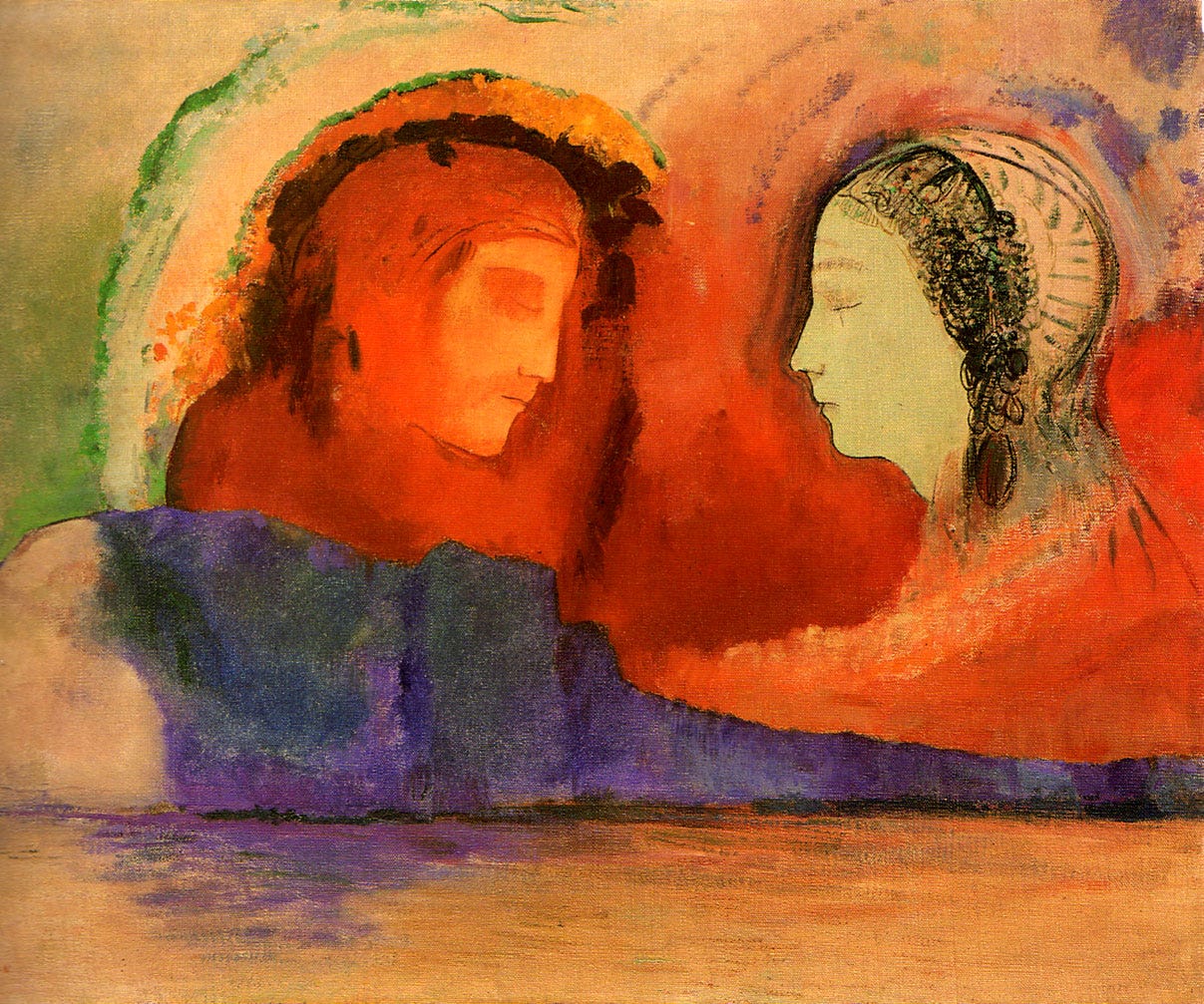
One of my favorite artists has a beautiful painting of their love. In it, the two lovers face each other, their eyes closed. They’re together but separate.
What interested me most about La Vita Nuova, aside from the romantic lore, was the way Dante referred to his encounters with Beatrice. He repeatedly states that it is through her greeting that he experiences bliss.
She turned her eyes to where I was standing faint-hearted and, with that indescribable graciousness for which today she is rewarded in the eternal life, she greeted me so miraculously that I seemed at that moment to behold the entire range of possible bliss.
And:
And for this reason, that is, the exaggerated rumors which made me out to be a vicious person, my most gracious lady, scourge of all vices and queen of the virtues, passing along a certain way, denied me her most sweet greeting in which lay all my bliss.
The word that Mark Musa has translated as “greeting” is salute, which has three meanings: greeting, salutation, and salvation.
So let’s redo these and replace greeting with salvation:
She turned her eyes to where I was standing faint-hearted and, with that indescribable graciousness for which today she is rewarded in the eternal life, she granted me salvation so miraculous that I seemed at that moment to behold the entire range of possible bliss.
Or:
And for this reason, that is, the exaggerated rumors which made me out to be a vicious person, my most gracious lady, scourge of all vices and queen of the virtues, passing along a certain way, denied me her most sweet salvation in which lay all my bliss.
Throughout the book, famously considered to be about love, Dante is really just trying to get closer to God. And he can get there because of Beatrice. When she sees him, she saves him.
This belief that when we’re seen, we’re saved is present throughout thousands of years of literature.

When we’re seen, we’re saved—a jaunt through literary and philosophic history
In Sappho’s fragment 31, she writes:
He seems to me equal to gods that man
whoever he is who opposite you
sits and listens close
to your sweet speaking
and lovely laughing—oh it
puts the heart in my chest on wings
for when I look at you, even a moment, no speaking
is left in me
no: tongue breaks and thin
fire is racing under skin
and in eyes no sight and drumming
fills ears
and cold sweat holds me and shaking
grips me all, greener than grass
I am and dead—or almost
I seem to me.
According to Sappho, the man who has the woman’s attention is equal to the gods. And what are gods most known for? Living forever. So basically, a woman’s attention grants the lover immortality.
In Phaedrus, Plato, states that it is through seeing that we connect to ultimate being
Once upon a time, our souls were great feathered beings who existed beyond the heavens. In this place, our souls glimpsed pure, unadulterated knowledge. This knowledge was existence itself.
No poet among us has ever sung of the place beyond the heavens, and none will ever sing of it worthily, but this is what it is like—for one must dare to tell the truth, especially when it is truth one is speaking about. This place, the province of true knowledge, is occupied by the kind of being that is in the fullest sense, the intangible being that has no colour or shape and can be beheld only by the intellect, the steersman of the soul… not the knowledge that has any connection with becoming, and is in any way different when applied to different things among those which we now call beings, but the knowledge that is in and of the kind of being that is in the fullest sense. And when it has in the same manner beheld and feasted upon the rest of the beings that truly are, it sinks back into the interior of the heavens and goes home.
Then some of us lost our feathers and became entombed in bodies, like pearls condemned to their shells. But our souls remain immortal! And we still have memories of that place of true being. The problem is, it’s difficult to remember our true, immortal selves, the inner beings who have feasted upon pure knowledge.
The only way we can experience that transcendence again and remember what our souls have forgotten is to look at beauty.
But it is not easy for every soul to recollect those beings from the things here…Few are left in whom an adequate recollection is present, but these few, when they lay their eyes on any likeness of the things there, are bowled over and can no longer control themselves, but they do not understand what they are experiencing because of the inadequacy of their perception. In these likenesses of justice and moderation and all other things that are precious to souls, there is no radiance, but a few souls, when they come upon these images, see with difficulty through cloudy sense-organs the nature of their originals… Let this, then, be our tribute to memory, delivered at extended length now for its sake out of a yearning for the things of that earlier time. But we are speaking about beauty, and saying that, even among those beings, it shone out conspicuously, and since we came here we have apprehended it most clearly through the most distinct of our senses. For sight is the sharpest of the senses that reach us through the body, through the world, though wisdom is not seen by it—wisdom would arouse frightening passions of love if a clear image of it were given to us as comes to sight—nor are the other lovable beings visible. Beauty alone allotted that prerogative, and thus it is the most crystal-clear and love-inspiring of them all.
Basically, Plato, via Socrates, is saying that through seeing beautiful people or beautiful things, we can remember a place beyond the heavens. When we see our beloved, our souls begin to itch, and feathers begin to sprout once more. And! The power of sight is so incredible that not even the pursuit of knowledge can match the transcendence afforded by witnessing beauty.
In the Symposium, Plato says, that the ultimate act of love is creation.
Socrates talks to a wise woman, Diotima, about the nature of love. I like to imagine her as a young priestess, like the oracle at Delphi. She’s sexy, and she’s bossy, and she totally schools Socrates on the nature of love.
She begins her theory of love by telling a young, misguided Socrates that love is wanting the good to be yours forever. But how is that possible? How can someone pursue love if they want good to be theirs forever? That is the question.
Her answer is that a lover pursues love by creating under the influence of a beautiful thing.
Diotima says:
‘Well, then, I will tell you,’ she said ‘it is bearing offspring in the presence of a beautiful thing, by means of the body or the soul.
…All human beings are pregnant, Socrates, both in body and in soul, and when they reach a certain age, the nature within us brings an urgency to give birth…
For Socrates,’ she said, ‘love is not for the beautiful, as you think it is, but for generating and bearing offspring in the presence of the beautiful…because generation is something eternal and immortal within what is mortal. It necessarily follows from the things that have been agreed upon that there is a desire for immortality along with the good… The mortal nature is seeking to be, as far as is possible, everlasting, and mortal.
So, according to the wise woman, Diotima, because we are pregnant in our souls, we climb the ladder of love. First, we pursue a beautiful body. Then we realize that any beautiful body is pretty much as beautiful as any other, so we move on to loving all beautiful bodies. Then we realize that the real beauty is to be found in the soul. Then we start to love the beauty found in knowledge, so we try to read and study and make laws and design cities. Finally, we come to the highest form of loving, which is love for beauty itself.
‘Don't you realize,’ she said, ‘that it is only in that place where he can behold the beautiful with the sight by which it is visible, that he will attain the ability to give birth not to phantasms of virtue, since it is no phantasm that is in his grasp, but to true virtue, since it is the truth that is in his grasp? True virtue is what he gives birth to and nurtures, and he will gain for himself the love of the gods. If any human being has a way of becoming immortal, it is he.
So basically, it doesn’t matter which specific body we look at, it doesn’t matter which specific piece of knowledge we covet; when we really look at all beautiful things, and when we witness them and love them just as they are, we are free to move towards a higher pursuit of loving all beauty, and once we can love beauty itself, we give birth within our soul to something immortal.
The entire plot of Virginia Woolf’s The Waves is about the power of an attentive soul and how it remakes us and erases our separateness.
How there is no singular me or you—only an us that can be felt through witnessing. There’s a scene that will stick with me forever. A young man named Neville watches his crush, Bernard, walk towards him:
Something now leaves me; something goes from me to meet that figure who is coming, and assures me that I know him before I see who it is. How consciously one is changed by the addition, even at a distance, of a friend. How useful an office one’s friends perform when they recall us. Yet, how painful to be recalled, to be mitigated, to have one’s self adulterated, mixed up, become part of another. As he approaches, I become not myself but Neville mixed with somebody—with whom? With Bernard? Yes, it is Bernard, and it is to Bernard that I shall put the question, who am I?
In The Art of Loving, Erich Fromm states:
“What does one person give another? He gives of himself, of the most precious he has, he gives of his life… he gives of that which is alive in him; he gives him of his joy, of his interest, of his understanding, of his knowledge, of his humor, of his sadness… In thus giving of his life, he enriches the other person, he enhances the other’s sense of aliveness by enhancing his own sense of aliveness.”
What Fromm is saying here is that the greatest act of love is to be generous with our attention. If we give our most authentic awareness and aliveness, we enrich the lives of those we love and ourselves.
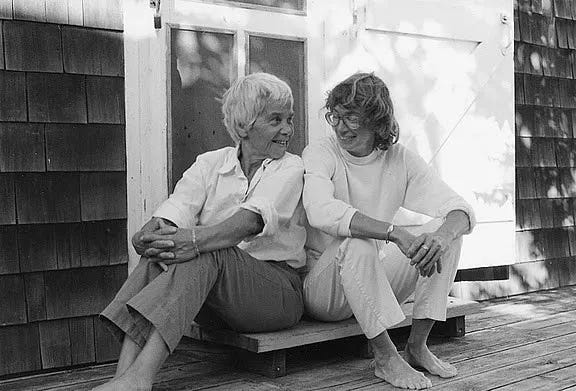
In the beautiful book Our World by Mary Oliver, she writes of her life with her partner Molly Cook:
“It has frequently been remarked, about my own writings, that I emphasize the notion of attention. This began simply enough: to see that the way the flicker flies is greatly different from the way the swallow plays in the golden air of summer. It was my pleasure to notice such things, it was a good first step. But later, watching M. when she was taking photographs, and watching her in the darkroom, and no less watching the intensity and openness with which she dealt with friends, and strangers too, taught me what real attention is about. Attention without feeling, I began to learn, is only a report. An openness — an empathy — was necessary if the attention was to matter. Such openness and empathy M. had in abundance, and gave away freely… I was in my late twenties and early thirties, and well filled with a sense of my own thoughts, my own presence. I was eager to address the world of words — to address the world with words. Then M. instilled in me this deeper level of looking and working, of seeing through the heavenly visibles to the heavenly invisibles. I think of this always when I look at her photographs, the images of vitality, hopefulness, endurance, kindness, vulnerability… We each had our separate natures; yet our ideas, our influences upon each other became a rich and abiding confluence.”
One or one thousand, it doesn’t matter
I know I was being melodramatic in The Work of Art Part 6 about my Instagram friends not buying my books. But really, the truth is: if anyone, like literally one person, reads my poem or my book, I am honored.
What a true gift that person has given me—they have offered me their time. They have offered me their attention.
And when someone sees us, they offer us salvation. Not in the Christian biblical sense, but a salvation of the spirit. How could I ever take that for granted? The power and force of that gift does not change whether 10 people read my book or 10,000.

There is only one important time, and that time is now
Whenever my friends have a baby, I give them this book called The Three Questions. It’s a beautiful retelling of a Tolstoy story. The book is about a little boy who wants to know the answers to three questions.
What is the best time to do things?
Who is the most important one?
What is the right thing to do?
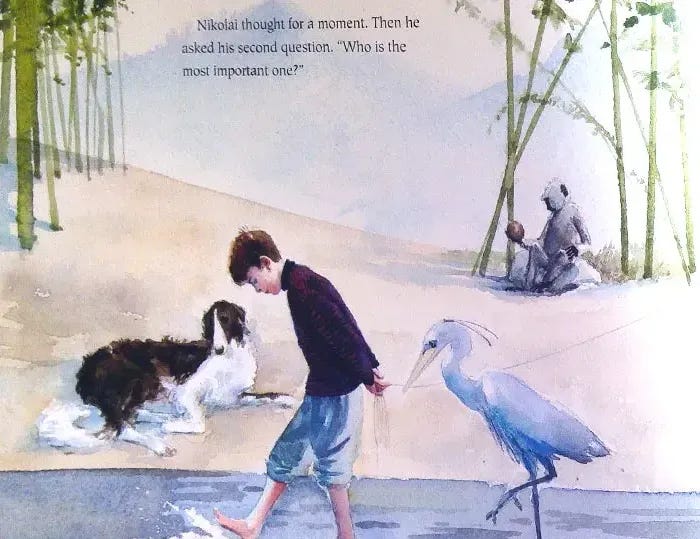
Leo, the turtle, tells him:
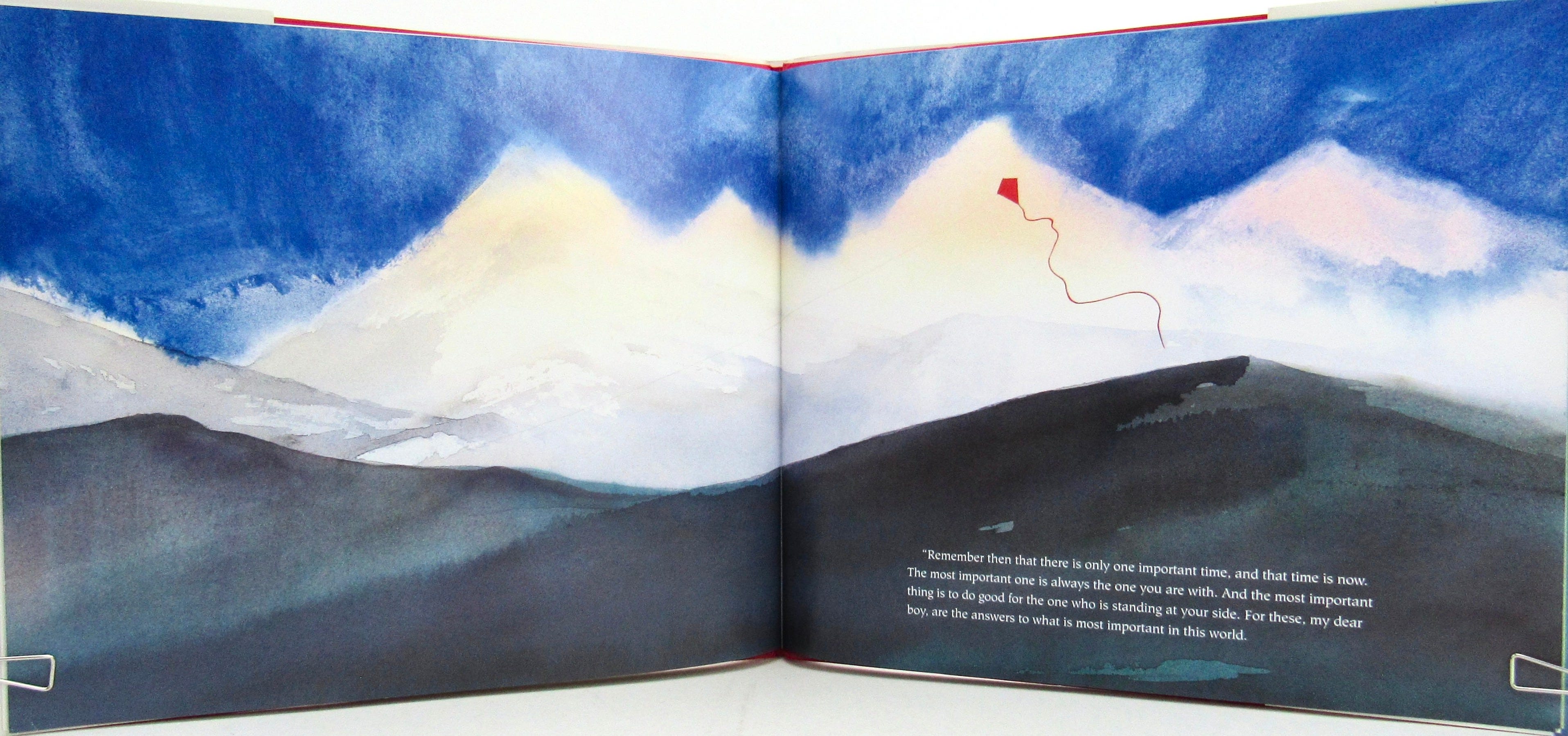
“Remember then, there is only one important time, and that time is now. The most important one is always the one you are with. And the most important thing is to do good for the one who is standing at your side. For these, my dear boy, are the answers to what is most important in this world. This is why we are here.”
The most powerful gift we have to offer the world is our present attention, and yet there are powerful forces at work motivated to take what little attention we have and turn it back on us, like some metastasized monster.
In this modern society, the most radical and revolutionary thing we can do is put away our devices, stop checking Instagram every three minutes, and do good for the one standing at our side.
So go forth! Be present. Pay attention.
If you only read one book this year, treasure every page. That’s enough. If you only write one poem, make sure that the act of writing it is delicious and sweet. That’s enough.
I will leave you with this lovely Mary Oliver poem:
THE WHISTLER
All of a sudden she began to whistle. By all of a sudden
I mean that for more than thirty years she had not
whistled. It was thrilling. At first I wondered, who was
in the house, what stranger? I was upstairs reading, and
she was downstairs. As from the throat of a wild and
cheerful bird, not caught but visiting, the sounds war-
bled and slid and doubled back and larked and soared.
Finally I said, Is that you? Is that you whistling? Yes, she
said. I used to whistle, a long time ago. Now I see I can
still whistle. And cadence after cadence she strolled
through the house, whistling.
I know her so well, I think. I thought. Elbow and an-
kle. Mood and desire. Anguish and frolic. Anger too.
And the devotions. And for all that, do we even begin
to know each other? Who is this I’ve been living with
for thirty years?
This clear, dark, lovely whistler?

BONUS:
Working theory of love (that, it turns out, has been recorded by nearly every great thinker for the last 5,000 years ha ha—so much for originality)
Love is beyond thought; it is sensations, it is presence. Desire exists only in the mind.
You enter Love through Eros, or desire.
Because desire exists only in the mind, you can think yourself into desiring or not desiring anyone, so you can think yourself into loving or not loving anyone.
Who you love, therefore, doesn’t matter so much. It’s a figment of your imagination anyway. Obviously, don’t love an asshole because it will make your day-to-day miserable, but it’s really not the point of love to choose the “right person.” Our minds are powerful and can make anyone right or wrong.
How you love matters a great deal.
Most of love is a mystery. It is unknowable, and that’s the point. The trick is to accept the mystery and not seek to understand it.
Desire exists in reaching for something. You can’t desire what you already have.
You can’t seek to know what you already know.
Humans take the most pleasure in hunting for love, hunting for knowledge, but not in loving or knowing.
Love, or what I call Elevated eros is to experience love without searching.
What is love without searching? It is just being. Love, therefore, exists in attention. In witnessing.
Love, therefore, exists, while watching, being with, but not trying to possess.
God is ultimately the being that can “see us” no matter what. God is the ultimate witness. With “god” there is no veil, only presence. We can embody “god” in our ability to “see.”
We’re super depressed and seek love because we’re scared to be alone (existential loneliness, the prison of our flesh bodies/consciousness).
But we’re scared not to be alone. Because if we were “one” like all the myths suggest we desire, we wouldn’t be us any longer. We don’t actually want to disappear. It’s our greatest fear.
We can only truly Love when we exist beyond thought, and to exist beyond thought is to have the self disappear. Which is, effectively, to die.
To Love is to die.


